
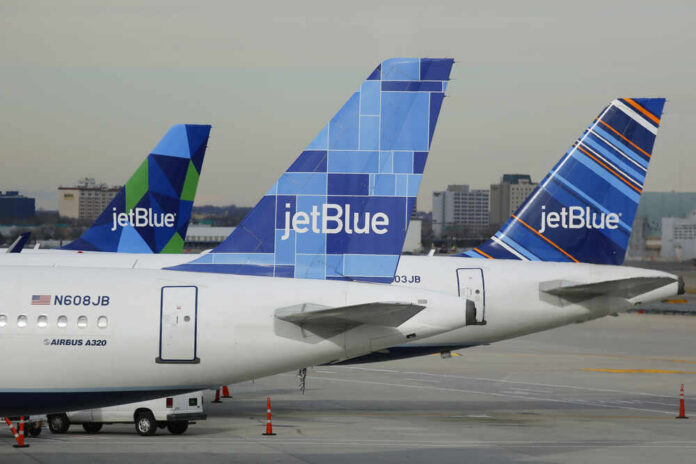
JetBlue’s sudden system failure grounded all its flights nationwide, exposing critical vulnerabilities in airline IT infrastructure that could strand American travelers amid an aviation sector still recovering from years of regulatory overreach.
Story Snapshot
- FAA issued a nationwide ground stop for all JetBlue departures on March 10, 2026, at the airline’s own request due to an internal system outage.
- The halt lasted approximately 40 minutes to one hour, affecting flights to over 110 destinations before quick resolution.
- JetBlue serves major hubs like JFK, impacting thousands of passengers with potential delays from tight scheduling.
- This rare airline-initiated stop highlights ongoing IT risks in U.S. aviation, contrasting with past FAA-wide disruptions.
Event Timeline and Details
JetBlue requested the ground stop from the FAA early on March 10, 2026, around 10 p.m. PT the previous day, due to a brief internal system outage. The FAA implemented the nationwide halt for all JetBlue departures to all destinations. Flights already airborne proceeded without interruption. This affected JetBlue’s network spanning over 110 destinations across the U.S., Caribbean, Latin America, Canada, and Europe. The measure prevented potential mid-flight safety issues from unresolved systems.
Swift Resolution and Official Statements
The ground stop lifted roughly 40 minutes to one hour later after JetBlue resolved the outage. JetBlue confirmed in a statement: “A brief system outage has been resolved and we have resumed operations.” The FAA verified the stop was at JetBlue’s request and lifted it promptly. By morning reports on March 10, JetBlue operated normally with no ongoing disruptions noted. This quick fix minimized broader chaos compared to lengthier past incidents.
FAA briefly grounds all JetBlue flights after a request from the airline https://t.co/qSJ3jjlNI4
— Boston Herald (@bostonherald) March 10, 2026
Stakeholders and Safety Protocols
JetBlue Airways, headquartered in New York City with a flagship at JFK Airport, initiated the request through its unnamed operations team to prioritize safety. The FAA, as regulator, executed and lifted the stop, demonstrating collaborative protocols for airline-led issues. No internal FAA fault occurred. JetBlue’s scale amplified the impact, but both entities focused on rapid recovery to avoid cascading delays from aircraft rotations and tight schedules.
Historical Precedents and Industry Context
This incident adds to U.S. aviation’s pattern of IT-driven disruptions, including Southwest’s 2021 reservation glitch, Alaska Airlines’ 2025 software issue, and the FAA’s 2023 NOTAM outage that grounded all departures nationwide. Unlike FAA-initiated halts, JetBlue self-requested the stop, a rarity underscoring low-cost carriers’ IT vulnerabilities. Ground stops remain standard for safety during outages. Under President Trump’s deregulatory push, such events remind us of the need for robust private-sector infrastructure free from excessive government interference.
FAA briefly grounds all JetBlue flights after a request from the airlinehttps://t.co/YatgP2eiB3
— Mel (@Mellow_504) March 10, 2026
Impacts and Broader Implications
Passengers faced takeoff delays, with hubs like JFK temporarily impacted, though no cancellations occurred. Short-term effects included potential knock-on delays and minor economic costs from grounded planes. Long-term, the brevity limits fallout but highlights IT fragility in an industry reliant on precise scheduling. Thousands experienced travel disruptions, reinforcing calls for airlines to bolster systems independently, aligning with conservative principles of limited government reliance and personal responsibility in commerce.
Sources:
FAA Briefly Grounds JetBlue Flights After Airline Reports System Outage
FAA grounds all JetBlue flights after airline asks it to, agency says
FAA says ground stop issued for JetBlue flights
FAA grounds all JetBlue flights after request from airline
US FAA issues ground stop for all JetBlue planes
FAA grounds all JetBlue flights nationwide
FAA grounds all JetBlue flights nationwide