House Republicans just turned a Trump-headlined fundraiser into a midterm cash surge—while grassroots conservatives are asking why Washington can bankroll campaigns fast but can’t keep promises on border security, energy costs, and avoiding new wars.
Story Snapshot
- President Trump headlined the NRCC’s annual President’s Dinner on March 25, 2026, at Union Station in Washington, D.C.
- NRCC Chair Rep. Richard Hudson was expected to announce a major fundraising haul, with last year’s event setting records.
- Republicans are defending a razor-thin House majority in a high-stakes 2026 midterm environment with Democrats fundraising near parity.
- The dinner landed amid a DHS funding lapse, legislative gridlock, and political warning signs—including a flipped Florida district tied to Trump’s home base.
Trump’s NRCC Dinner: Big Money Night, Bigger Midterm Pressure
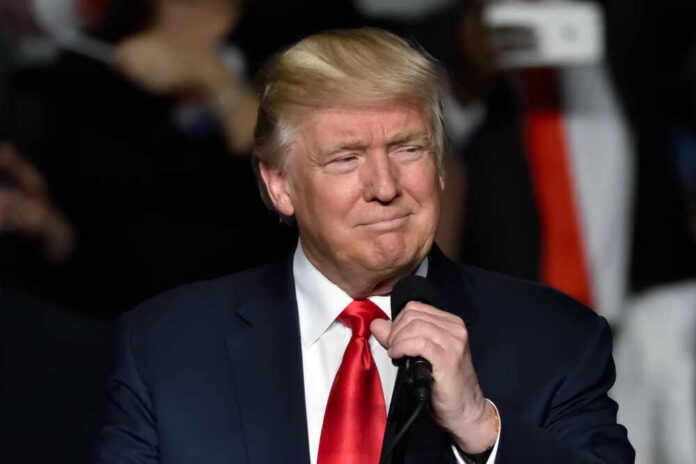
President Donald Trump spoke to House Republicans, donors, and supporters at the National Republican Congressional Committee’s annual President’s Dinner on March 25 at Union Station in Washington. The event is designed to finance competitive House races, and NRCC leadership signaled another strong haul was coming, though public reporting at the time did not include a final figure. Republicans are chasing momentum while trying to hold a narrow majority through November.
The money matters because Democrats aren’t sitting still. Reporting on the 2026 landscape shows both party committees operating in the same financial neighborhood, limiting the odds that one side can simply outspend the other into victory. The NRCC’s 2025 total was reported at $117.2 million, with Democrats close behind and similar cash on hand. That reality raises the stakes for candidate quality, message discipline, and turnout operations—especially in swing districts.
Why This Dinner Hit a Nerve With the Base
The NRCC dinner was staged as a unity play, but it comes at a time when many pro-Trump voters are more skeptical of “business as usual” politics than party leadership wants to admit. The same voters who spent years fighting progressive cultural pressure, inflation, and border breakdown now judge Republicans on basics: whether Washington can secure the homeland, lower energy costs, and prioritize Americans. In 2026, foreign policy debates—especially the Iran war—add fresh strain.
The reporting tied the night to a broader governing mess on Capitol Hill: a Department of Homeland Security funding lapse and a scramble to find a path forward while concerns pile up over security and costs. For constitutional conservatives, DHS dysfunction is not an abstract inside-the-Beltway problem. It touches airport screening reliability, immigration enforcement capacity, and whether federal resources are being deployed responsibly. Campaign dollars can’t substitute for functioning governance and credible oversight.
Fundraising Success Doesn’t Solve Strategy Problems
Trump remains the GOP’s most powerful fundraising and messaging asset, and the dinner reinforced that reality. At the same time, recent coverage described friction between Trump’s priorities and the practical constraints of Congress, including pushback after he pressed for an elections bill with little chance of becoming law. That tension matters because House Republicans need achievable wins to defend their majority, not just applause lines that energize one faction while stalling negotiations.
Political warning signs also hovered over the event. Coverage noted Democrats flipping a Florida statehouse seat that includes Trump’s home at Mar-a-Lago, a result Republicans cannot ignore heading into a midterm cycle. Separate reporting referenced polling suggesting that issues typically favorable to the GOP—economics and immigration—can become liabilities if voters feel daily costs are rising and Washington looks chaotic. The lesson is simple: a record dinner is helpful, but it isn’t a governing record.
What to Watch Next: Messaging, Majorities, and the War Debate
The immediate question is what fundraising total the NRCC ultimately posts and how quickly that money moves into targeted districts. The next question is whether Republicans can convert resources into a coherent, constitutional-first agenda that speaks to voters who feel squeezed by prices and exhausted by international conflict. Reporting on the dinner emphasized it as another platform for Trump to sell his agenda ahead of the midterms, but the coalition he built is not monolithic on foreign policy.
The political takeaway is that the GOP is building a war chest for November while confronting a tougher reality: fundraising strength must translate into results voters can feel—secure borders, lower energy pressure, and a foreign policy that protects America without drifting into open-ended commitments.