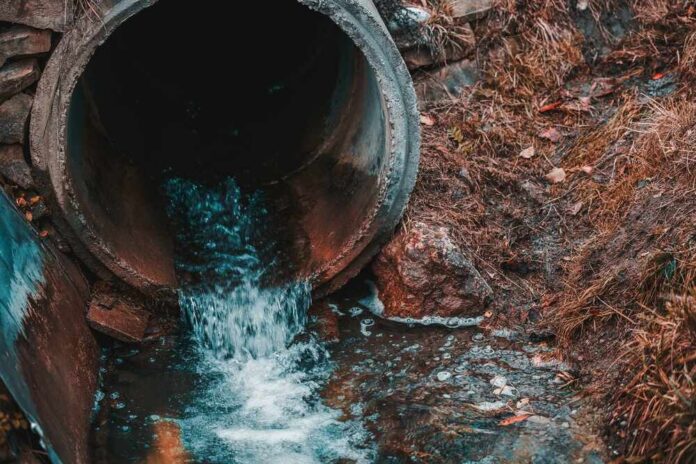
Britons are watching raw sewage surge out of Victorian-era overflow systems—and many are wondering why they pay more every year for infrastructure that still can’t keep human waste off streets and out of rivers.
Story Snapshot
- Multiple reports describe the same phenomenon: combined sewer overflows forcing untreated sewage onto roads, paths, and into waterways during storms.
- Citizen testing after January 2026 flooding in the River Mole area recorded extremely high E. coli readings and elevated ammonia and phosphates after storm overflows.
- New research argues England’s overflow system pollution load can rival or exceed wastewater treatment works for key pollutants, challenging the “it’s only occasional” narrative.
- Regulators and water companies face mounting credibility problems as bills rise while decades-old overflow points continue spilling.
What “Rivers of Sewage” Actually Are: Combined Sewer Overflows on Old Networks
England’s problem is rooted in combined sewer systems built in the 19th century, where stormwater and household sewage share the same pipes. Heavy rain can exceed system capacity, pushing overflow discharges out through designed spill points—and, in some cases, up through manholes onto streets and paths. Research cited in March 2026 argues the true impact is better understood by pollution load and risk, not just how often an overflow activates.
Reports tied to the River Mole catchment describe storm events where sewage was seen coming out across car parks and roads, consistent with overflow behavior during peak rainfall. Some overflows can create visible, foul flows that include fecal matter—an obvious public-health concern when it reaches places people walk, cycle, or allow children and pets to play. Those conditions also create localized contamination that may not be fully captured by standard monitoring locations.
River Mole, January 2026: Citizen Testing Flags a Public-Health Red Alert
Citizen scientists with River Mole River Watch documented post-storm water quality in late January 2026 after flooding peaked around January 22. Their testing reported E. coli at 26,000 cfu/100ml, far above the commonly referenced guideline level of 900 cfu/100ml noted. They also reported “genuinely new” spikes in ammonia and phosphates, suggesting a sewage impact that dilution alone cannot explain away.
Those numbers matter because overflow pollution is not just an environmental talking point—it is a direct exposure risk. High E. coli indicates fecal contamination and a greater chance of illness from contact, especially for swimmers, anglers, and residents near affected banks. The River Mole example also highlights a reality regulators struggle with: contamination can peak after storms and vary by location, leaving families unsure when local water is safe.
New National Research: Overflows Can Outpollute Treatment Works on Key Measures
Combined sewer overflows pose a greater threat to England’s rivers than previously measured, because CSOs can discharge large pollution loads in short bursts. The national estimates including 420,000 tonnes of biochemical oxygen demand and 360,000 tonnes of suspended solids in 2023, and notes that CSO loads can exceed wastewater treatment works for certain pollutants.
That framing challenges a familiar defense: that overflows are rare “safety valves” and therefore a lesser issue than treatment plants. The research suggests pollution is uneven, with smaller or “worst-performing” sites creating outsized damage, and with 44.7% of systems rated high or very high risk. For taxpayers and ratepayers, the question becomes practical: if the worst sites drive the harm, why has investment not been ruthlessly targeted there first?
Bill Hikes and Accountability: Consumers Pay More While Spills Persist
Pressure is growing on water companies and regulators because higher household bills are arriving alongside continued spill reports. In Kent, Southern Water has tied bill increases to investment needs, with figures indicating bills rising from £704 to £759 in 2026 and an additional increase projected by 2029/30. Local reporting also points to decades of warnings about sewage problems on the Kent coast, intensifying public frustration with oversight.
Regulators such as Ofwat and the UK government sit in the middle, balancing affordability against infrastructure mandates, but the political outcome is the same when spills continue: public trust erodes. Privatized water companies retain operational control, while the public bears the health and lifestyle consequences when rivers and coastlines become questionable. The strongest claims come from measurable testing and published load estimates; the weakest are broad assurances that hikes will quickly translate to visible results.
Why This Resonates for American Conservatives Watching From Afar
American readers may see a warning in the UK story: when essential infrastructure becomes a managed decline, ordinary families are left navigating hazards they never voted for. The UK overflow debate is also a reminder that “expert-led” governance can still tolerate obvious failures if accountability is diffuse. Even in 2026, with Americans consumed by inflation after fiscal mismanagement and frustration over endless foreign entanglements, voters still want the basics handled—clean water, competent maintenance, and regulators who answer to citizens.
This does not identify a single, specific UK street incident matching the exact viral phrasing, but it does establish the underlying mechanism and documents real January 2026 contamination in the River Mole area. The takeaway is simple and grounded: overflows are not abstract, and the measurable contamination is severe enough to justify public anger. If officials cannot prevent sewage from reaching public spaces during storms, they owe citizens transparent metrics, targeted fixes, and a timeline that matches the risk.
Sources:
Sewage overflows pose greater threat to England’s rivers than previously thought, study suggests
River Mole January 2026 Water Quality Update: Thames Water storm overflows caught in the act
Southern Water bills rise as sewage spills persist: 50 years of warnings on the Kent coast