Michigan’s highest court just told state regulators they looked at a massive Great Lakes oil project with blinders on, and now the future of a 73‑year‑old pipeline is suddenly up in the air.
Story Snapshot
- Michigan Supreme Court throws out a key permit for Enbridge’s Line 5 tunnel and orders a do‑over review.
- Justices say regulators ignored big-picture questions about extending the pipeline’s life and harming the Great Lakes.
- Tribal nations and environmental groups win a major procedural victory, but the project is not fully dead yet.
- The ruling fits a broader fight over who pays the price for aging energy systems: regular people or powerful interests.
High court vacates Line 5 tunnel permit
Michigan Supreme Court justices issued a 6-1 decision rejecting the state’s approval of Enbridge’s plan to bury part of its Line 5 oil pipeline in a tunnel under the Straits of Mackinac. The court said the Michigan Public Service Commission, the state energy regulator, did not fully consider key environmental questions before granting the permit in December 2023. The ruling sends the case back to the commission for a new review, creating more uncertainty around the aging pipeline’s future.
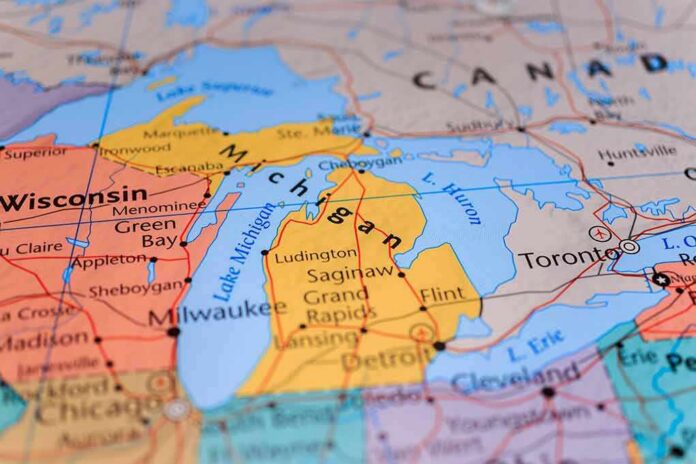
The section of Line 5 at issue runs about four miles along the bottom of the Straits of Mackinac, where Lake Michigan and Lake Huron meet. Enbridge proposed boring a tunnel under the lakebed and moving that segment of pipe inside, arguing this would reduce spill risk and protect the water. State regulators accepted that view the first time around, calling the tunnel the best way to address safety concerns at the straits. Now the high court has said that answer was not backed by a complete look at the risks and trade-offs.
Court faults narrow review and public trust gaps
The justices ruled that regulators wrongly focused only on the tunnel construction footprint and ignored how the project could extend the pipeline’s overall lifespan. The court said the commission had to ask whether keeping Line 5 running for decades longer would itself cause more environmental harm, not treat the tunnel as a stand-alone fix. It also found the commission did not properly examine how the project might affect “public trust” uses of the Great Lakes, like fishing, boating, and navigation that the state is supposed to protect for everyone.
Four Michigan tribal nations and several environmental groups brought the challenge, arguing the review skipped big-picture impacts on tribal treaty rights and on sacred sites near the straits. Opponents say turning this stretch of water into a construction zone for years would damage a place that holds deep meaning for Anishinaabe peoples. They also warn that locking in more oil transport under the Great Lakes clashes with efforts to cut pollution and move toward cleaner energy. The court’s opinion did not ban the project outright but agreed that these broader concerns must be weighed.
Pipeline politics, energy needs, and the “deep state” worry
Line 5 carries petroleum liquids from Superior, Wisconsin, to Sarnia, Ontario, feeding fuel and heating supplies in parts of the Midwest and Canada. Enbridge and many business groups say shutting it down or blocking the tunnel could raise energy costs and hurt jobs, especially in northern communities that already feel squeezed. Tribal leaders and environmental advocates counter that one major spill in the straits could devastate fisheries, tourism, and drinking water for millions of people, and that the company has had decades to modernize its system. This clash reflects a bigger question many Americans have: whose safety matters most when old energy infrastructure starts to fail.
The fight in Michigan also ties into national legal battles over the same pipeline. In April, the United States Supreme Court unanimously rejected Enbridge’s bid to move Michigan’s Line 5 shutdown lawsuit from state court to federal court, saying the company waited far too long to seek that change. That ruling kept key decisions closer to home, in front of Michigan judges instead of distant federal courts often seen as friendlier to big corporations. For people on both the right and left who worry about “deep state” maneuvering, these court outcomes look like rare moments where judges forced a powerful company to play by the rules.
Not a total victory, but a major reset
The Michigan Supreme Court’s decision does not order Line 5 shut down or forbid the tunnel forever; it tells regulators to go back and do their job with a wider lens. The commission will now have to reconsider alternatives to the tunnel, such as rerouting product, using other transport modes, or phasing out the pipeline segment altogether. It must also give more serious attention to tribal treaty rights, public trust uses of the lakes, and long-term environmental risks instead of treating the project as a narrow construction question. That process could take months or years and will unfold under heavy public pressure.
Michigan Supreme Court rejects permit for Enbridge Line 5 oil pipeline beneath the Great Lakes #Line5 pic.twitter.com/CEh0HaM0kr
— Patriot Watch (@PWatchNews) August 1, 2026
For many readers frustrated with both parties, the story here goes beyond pipelines. State agencies first backed Enbridge after long technical reviews, only to be told by the courts that they did not ask enough of the hard questions. That looks familiar to people who see regulators as too cozy with industry and too slow to stand up for ordinary citizens. At the same time, energy reliability and costs are real worries for families and businesses already battling inflation and tight budgets. This case shows how hard it is to balance environmental protection, economic needs, and distrust of elite decision makers, even when judges push the system to look more honestly at the full picture.
Sources:
washingtontimes.com, michigan.gov, bridgemi.com, detroitnews.com, supremecourt.gov, theguardian.com, eenews.net, nytimes.com, mlive.com, michiganpublic.org, courts.michigan.gov