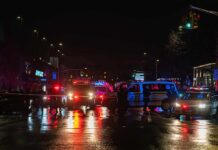

Japanese prosecutors have indicted a U.S. Marine in Okinawa, alleging he strangled a woman with a hotel phone cord and stole her belongings.
Story Snapshot
- Prosecutors allege the Marine strangled 39-year-old Anna Yagi and took her backpack and wallet.
- Police say Yagi was found unresponsive in her hotel room on October 3 and died from suffocation.
- Cameras reportedly showed the pair entering a hotel together; the Marine later left alone with her items.
- Okinawa hosts most U.S. bases in Japan, making cases like this flashpoints in local politics.
Indictment Details and Timeline
Naha prosecutors indicted U.S. Marine Corps Lance Cpl. Jeramy Ballard on October 25 in the death of Okinawan resident Anna Yagi. The filing alleges Ballard wrapped a telephone handset cord around Yagi’s neck at a hotel early on October 3, strangled her, and stole her backpack containing a wallet and other items. Police said Yagi, age 39, was found unresponsive in her room that morning and was pronounced dead at the scene. Investigators identified suffocation as the cause of death.
Police reportedly arrested Ballard less than 24 hours after Yagi’s death while he was walking in the city. Media accounts, citing investigators, say hotel security cameras showed Yagi and Ballard entering together, and later showed him leaving alone while carrying her belongings. A court spokesman confirmed the indictment was filed in Naha, and several outlets reported the charges, which are described in English as murder and robbery or robbery causing death, depending on translation.
What Authorities Allege and What Is Public
The indictment describes a specific method and intent: strangulation using a phone cord with the purpose to kill, plus theft of a backpack and wallet. Police sources tied the timeline to the early hours of October 3, when Yagi was found and declared dead. Reports say Ballard has denied the allegations. No publicly cited confession or detailed defense account appears in current coverage. Because this is a criminal case, the indictment states allegations that prosecutors must prove in court.
Published reports summarize key evidence but do not present full forensic files. Public accounts do not disclose autopsy photographs, DNA or fingerprint results, or lab work on the phone cord or property. Media descriptions of the camera footage do not show what happened inside the room. These limits are common before trial, when court filings and evidence are not yet fully public. They do not change the fact that prosecutors have filed formal charges supported by police reports.
Why This Case Reverberates in Okinawa
Okinawa hosts about 70 percent of United States military facilities in Japan, which makes any alleged crime by American personnel a major political event. Local anger builds faster because the community sees repeated stories tied to the bases, even if the overall crime rate by service members is low compared with total crime in the prefecture. Each high-profile case can reopen old wounds and fuel protests over the Status of Forces Agreement and base footprint.
Researchers and officials have tracked thousands of cases involving United States service members and families over decades, including serious offenses, which shapes public memory. That history explains the intense coverage and the calls for accountability after Yagi’s death. It also explains why both Japanese leaders and United States commanders face pressure to show swift cooperation, clear communication, and respect for local law when a case moves forward.
What Comes Next in the Legal Process
The indictment moves the case into Japan’s criminal courts, where prosecutors must prove the charges beyond a reasonable doubt. The charge has been described as murder and robbery, and also as robbery causing death, depending on translation and legal framing in the Japanese code. Court hearings will determine what evidence is admissible, how the camera timeline fits with hotel records, and whether physical items, like the phone cord and backpack, link to the accused.
American and Japanese officials will also navigate custody and cooperation under the bilateral Status of Forces Agreement. That pact sets rules for jurisdiction and evidence sharing when United States personnel are accused in Japan. In practice, high-profile cases prompt extra attention from both governments. Families in Okinawa want safety and fairness. Americans want due process for service members. A transparent court process is the only path to both.
Sources:
military.com, cnn.com, stripes.com, cbsnews.com, washingtonexaminer.com, calhoun.nps.edu