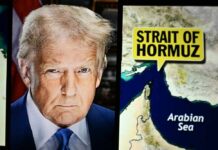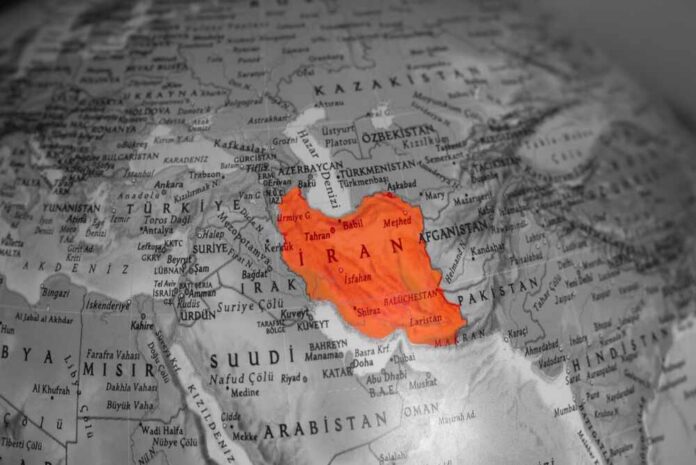
A last-minute two-week pause in U.S. strikes on Iran now hinges on one hard test: whether Tehran actually allows safe, uninterrupted passage through the Strait of Hormuz.
Story Snapshot
- President Donald Trump announced a two-week suspension of U.S. strikes after Pakistan brokered talks tied to reopening the Strait of Hormuz.
- Iran accepted through its Supreme National Security Council but stressed the deal does not end the war and said passage would be coordinated by Iran’s armed forces.
- Pakistan’s prime minister publicly urged a two-week “double-sided” ceasefire hours before Trump’s deadline, positioning Islamabad as the key mediator.
- The agreement averts an immediate escalation, but conflicting expectations over “complete reopening” versus Iranian control could break the deal quickly.
Trump’s Ceasefire Offer: Pause the Bombing, Reopen the Strait
President Trump said the U.S. would suspend strikes on Iran for two weeks if Iran immediately reopened the Strait of Hormuz and ensured safe transit. The timing mattered: reports described the ceasefire taking effect with less than an hour left before Trump’s stated deadline, after Pakistan relayed talks. The administration framed the pause as a chance to pursue a broader “acceptable deal,” not as a concession.
The Strait of Hormuz is the practical center of gravity in this fight because it affects oil shipping and global prices. Trump’s condition reflects a familiar America-first logic: protect trade routes, limit open-ended conflict, and keep leverage by making relief conditional. The core question now is enforcement—what counts as “complete reopening,” who verifies safety, and what happens if either side claims the other violated terms.
Iran’s Acceptance Comes With a Major Caveat: Control Stays With Tehran
Iran agreed to the two-week ceasefire but described it in conditional terms, stressing it is not the end of the war. Iranian statements emphasized that safe passage would occur under coordination by Iran’s armed forces, a formulation that signals continued military control rather than a neutral guarantee. That matters because the U.S. demand is about outcomes—unimpeded transit—while Iran’s messaging highlights sovereignty and command.
This gap in definitions is where ceasefires often fail. A shipping lane can be “open” on paper while still being constrained through inspections, delays, or selective permissions. With the U.S. pausing strikes and Iran retaining operational control, both sides can claim compliance while accusing the other of bad faith. In a high-stakes chokepoint, ambiguity becomes a strategic tool.
Pakistan’s Mediation Upends the Usual Middle East Playbook
Pakistan’s Prime Minister Shehbaz Sharif emerged as the central broker, urging a two-week window for diplomacy and publicly pressing for reciprocal steps from both sides. That is a notable shift from the more typical role played by Gulf intermediaries in regional crises. The talks were set to begin in Islamabad, giving Pakistan a rare chance to shape outcomes while presenting itself as a stabilizing actor with access to both capitals.
For Washington, using a mediator can lower the political cost of de-escalation while preserving pressure. For Tehran, Pakistan’s involvement offers a way to accept a pause without appearing to yield directly to U.S. threats. The upside is speed: the deal was apparently assembled in hours. The downside is durability: rushed arrangements often lack the verification and sequencing needed to survive the first dispute over compliance.
What This Means for Americans: Energy Prices, War Powers, and Trust in Government
If the Strait of Hormuz stays reliably open, oil traffic normalization could ease price pressure, a kitchen-table issue that hits working families and retirees hard. If the ceasefire collapses, the opposite can happen quickly. Conservatives frustrated by inflation and energy costs will see why the administration tied military restraint to a concrete economic interest. Liberals skeptical of force abroad may still question the risk of sliding back into strikes without durable diplomacy.
It is still unclear what specific benchmarks define success during the two-week window, or how violations would be adjudicated. That uncertainty feeds a broader bipartisan frustration: major national-security decisions are often communicated through high-level statements while the mechanics remain opaque. The coming talks in Islamabad will matter less for slogans and more for measurable outcomes—days of safe transit, verified deconfliction, and a pathway beyond temporary pauses.
Sources:
https://www.axios.com/2026/04/07/iran-us-ceasefire-pakistan-two-weeks