President Trump is betting that an open Strait of Hormuz—and lower pain at the pump—depends on Iran believing the U.S. will actually enforce a ceasefire.
Quick Take
- Trump warned Iran that U.S. forces will remain in position until a “real deal” is honored, tying the truce to free navigation through the Strait of Hormuz.
- U.S. reporting cited Iranian restrictions on shipping, including routing rules and fees, alongside U.S. intelligence claims of sea mines placed in the strait.
- Iran disputed key parts of the ceasefire’s scope and warned of “strong responses,” as fighting and political tensions linked to Lebanon continued in parallel.
- Because roughly one-fifth of global oil flows through Hormuz, even partial disruption quickly feeds oil volatility and higher transportation costs.
Trump’s Warning Centers on Shipping Access and Deterrence
President Donald Trump used public statements and social media to demand Iran fully comply with a fragile ceasefire by reopening the Strait of Hormuz for unrestricted global shipping and by abandoning nuclear ambitions outlined in the U.S. position. Reports described Trump threatening escalated military action if Iran continued what the administration framed as violations, including control measures on passage. The message was straightforward: the U.S. would keep forces in place until compliance was verified.
Reporting also highlighted the unusual tone and specificity of Trump’s rhetoric, including threats aimed at infrastructure targets such as power plants and bridges if Iran refused to reverse course. While that language drew predictable outrage from critics, the underlying policy focus was concrete: free navigation through a narrow chokepoint that directly affects U.S. fuel prices and the cost of goods.
What Iran Is Accused of Doing in the Strait—and What’s Unconfirmed
Multiple reports described Iran tightening its grip on the strait by issuing navigation protocols, requiring permissions or specific routes, and charging fees. U.S. intelligence was also cited as claiming Iran planted at least a dozen underwater mines in March. That mine count is significant, but it is also a reminder of the fog that comes with fast-moving military standoffs.
The operational reality is that even the perception of mines, seizures, or “tolls” can change insurer behavior, shipping schedules, and risk pricing overnight. That mechanism matters to Americans who do not follow Middle East policy day to day, because it translates quickly into higher costs for diesel, air travel, and transported goods. When policymakers talk about “energy independence,” Hormuz is one of the reasons global supply shocks still hit U.S. households.
Ceasefire Dispute Spills Into Lebanon, Raising Escalation Risks
A central complication is that the parties appear to disagree on what the ceasefire covers. Iran-linked statements in the reporting suggested the truce framework should constrain actions connected to Lebanon and Hezbollah, while U.S. and Israeli positions described in coverage rejected that linkage. The result is a blame loop: Iran points to strikes in Lebanon as violations, while the U.S. points to restrictions and threats in Hormuz as violations.
International officials signaled concern about escalation. The U.N. secretary-general warned that developments tied to Lebanon could endanger the truce, and NATO’s secretary-general relayed that Trump wanted concrete allied commitments related to securing the strait. That mix—regional conflict plus maritime brinkmanship—creates a high-pressure environment where miscalculation is easy. As of the latest reporting, the truce remained shaky and weekend talks hosted by the U.S. were still pending.
Why This Matters at Home: Prices, Credibility, and Government Trust
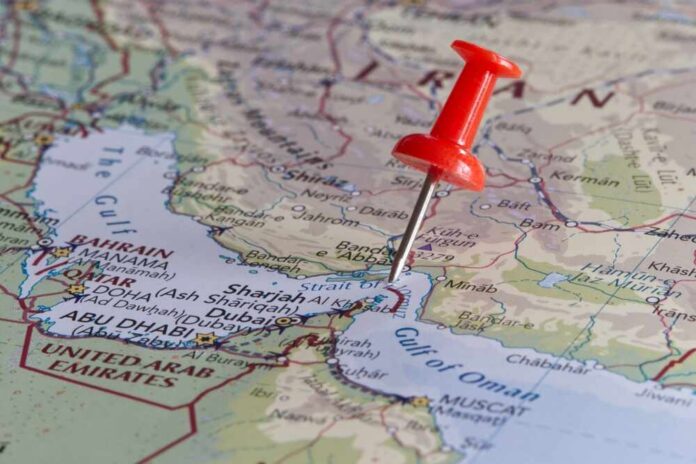
The Strait of Hormuz is only about 21 miles wide at its narrowest point, yet it carries roughly 20% of global oil flows. That statistic helps explain why markets react so sharply to threats, mines, and new routing rules. With oil reported near $100 a barrel and U.S. gasoline and diesel already elevated in the coverage, the public stakes are immediate: the cost of commuting, food distribution, and small-business shipping margins.
Trump Drops a Big Warning to Iran Over Violations of Ceasefire Agreement in Straithttps://t.co/cKkBAIIKN0
— RedState (@RedState) April 10, 2026
Politically, this also lands inside a deeper, bipartisan frustration: many Americans doubt the federal government can execute consistent strategy abroad without drifting into either endless war or paper agreements that collapse on contact. It shows Democrats criticizing Trump’s approach as outrageous and escalatory, while Trump’s team frames toughness as necessary deterrence. The hard test will be measurable outcomes—safe passage, fewer attacks, and a verifiable reduction in nuclear risk—rather than rhetoric alone.
Sources:
Iran war live updates: Trump, Lebanon, Israel, Strait of Hormuz ceasefire dispute
Ceasefire threatened as Iran closes strait again and Trump warns US troops to remain