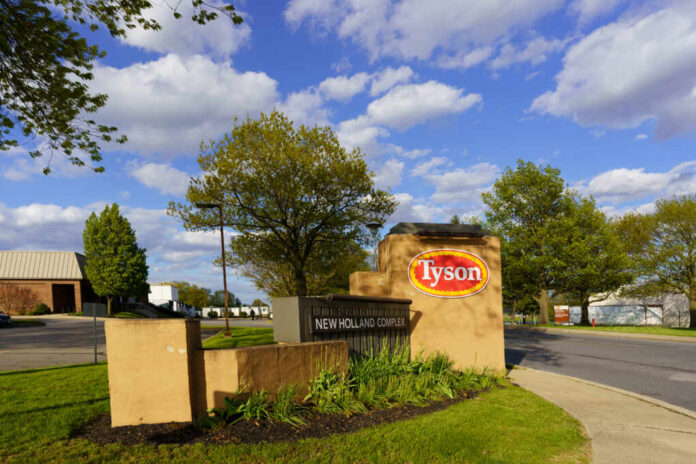
Corporate giant Tyson Foods devastated a small Nebraska community by permanently shuttering its massive beef processing plant in Lexington. The decision eliminated over 1,100 jobs in a town of just 7,000 residents, stripping the community of its primary economic anchor. This move highlights the accelerating trend of corporate consolidation in the meatpacking industry, exposing how “Big Meat” can prioritize operational efficiency and shareholder returns over the economic stability of rural America and the viability of independent cattle producers.
Story Highlights
- Tyson Foods permanently closed its Lexington, Nebraska, beef plant, eliminating 1,100+ jobs in a town of 7,000
- Cattle producers face a “logistics nightmare” with transport costs rising 20-30% to reach distant processing facilities
- The closure represents corporate consolidation that strengthens Big Meat’s monopolistic control over beef markets
- Rural communities lose economic anchors as major corporations prioritize efficiency over local stability
Corporate Consolidation Devastates Rural Economy
Tyson Foods announced the permanent closure of its Lexington, Nebraska beef processing facility on November 21, 2023, with operations ceasing January 20, 2024. The plant employed approximately 1,100-1,200 workers in a town of just 7,000 residents, representing 40-50% of local jobs historically. This corporate decision eliminated $50-100 million in annual payroll, demonstrating how multinational corporations can devastate rural communities with a single boardroom decision focused on operational efficiency over community stability.
The closure follows a troubling pattern of meatpacking consolidation that concentrates power among the “Big Four” packers, controlling 80% of U.S. beef processing. Tyson previously shuttered facilities in Holcomb, Kansas, in 2023, citing similar cost pressures and labor challenges. This systematic consolidation undermines the free market principles that built America’s agricultural sector, replacing competitive markets with corporate monopolies that can dictate terms to both producers and consumers.
Takeaways from AP's report on a beef plant closure that threatens to unravel a small Nebraska town https://t.co/6DMebhaG2W pic.twitter.com/qj5TeOO2Z3
— The Independent (@Independent) December 22, 2025
Cattle Producers Face Market Manipulation
Local cattle producers now confront a “logistics nightmare” as they must transport livestock over 200 miles to processing facilities in Kansas or Colorado. Industry analysts predict cattle transport costs will increase 20-30%, directly impacting ranchers’ profit margins and operational viability. This forces independent producers to absorb higher costs while Tyson benefits from streamlined operations at remaining facilities, exemplifying how corporate consolidation transfers costs from multinational corporations to hardworking American farmers.
Agricultural economists expect a 5-10% regional cattle price decline initially, as reduced local competition allows remaining processors to lower bids. This market manipulation demonstrates the dangers of allowing too much power to concentrate in too few hands. The closure reduces competition and creates artificial scarcity in processing capacity, undermining the competitive markets that ensure fair prices for both producers and consumers while maximizing corporate profits.
Community Devastation Exposes Corporate Priorities
Lexington’s Hispanic-majority workforce faces the most severe impact, with families confronting unemployment and potential displacement from their community. The plant served as an economic anchor for Dawson County, and its closure threatens to trigger population decline and reduced tax revenue that funds essential services like schools and infrastructure. Local businesses dependent on worker spending face potential closure, creating a cascading economic collapse that extends far beyond the plant gates.
This situation reflects broader threats to rural American communities as corporate giants prioritize shareholder returns over community stability. While Tyson pursues efficiency gains to benefit Wall Street investors, working families and small business owners bear the costs of corporate decisions made in distant boardrooms. The closure exemplifies how globalist business models sacrifice American communities on the altar of corporate profit maximization, undermining the local economies that form the backbone of conservative America.
Watch the report: Dread, tears as Tyson plans to lay off 3,200 workers in small Nebraska town – YouTube
Sources:
What Tyson Beef Plant Closure Means for Cattle Producers
Takeaways from AP’s report on a beef plant closure that threatens to unravel a small Nebraska town
An American Dream at risk: What happens to a small Nebraska town when 3,200 workers lose their jobs – The Washington Post