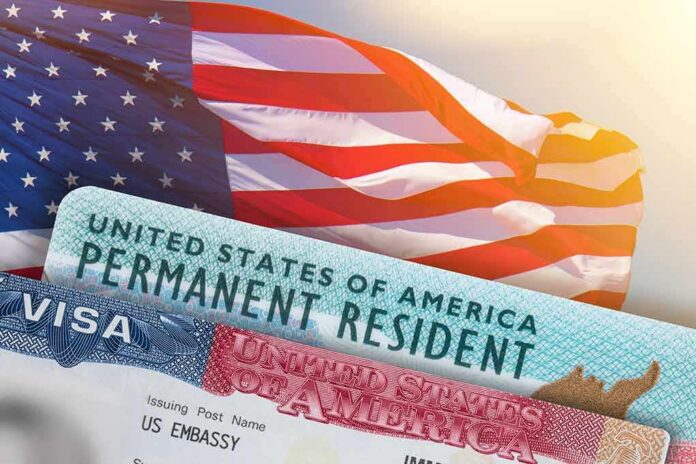
Officials say the United States is preparing the largest visa cancellation in its history, targeting up to 200,000 visitors who later applied for asylum.
Story Highlights
- State Department plans rolling cancellations of certain business and tourism visas tied to asylum filings.
- Officials say revocations will not automatically trigger deportations but will end visitor status.
- Government cites long‑standing visa rules that let consular officers revoke when eligibility no longer fits.
- Courts have recently pushed back on broad visa actions, signaling likely legal fights ahead.
What the government plans to do and who is affected
State Department officials, working with the Department of Homeland Security, plan to revoke business and tourism visas issued between 2016 and 2026 for people who later filed for asylum, according to reporting attributed to the Associated Press. A spokesperson said the process will roll out over time and the final number may change. The policy targets the B1 and B2 visitor classes. These are short-term visas meant for business meetings or tourism, not for staying in the country long term.
Officials say losing a visa will not automatically lead to deportation. Many people will still continue their asylum cases in immigration court, but they will no longer keep visitor status while they wait. That means they could face stricter check-ins, limits on travel, or faster removal if an immigration judge denies their claim later. The scale stands out. If it reaches 200,000, it would be the largest mass visa revocation ever recorded in the United States.
Why the administration says visa revocations are legal
The State Department maintains tools to cancel nonimmigrant visas when new facts show a person no longer meets the visa rules. The agency’s Foreign Affairs Manual lists grounds for revocation, including when an individual is not eligible for the visa classification, which can include the presumption of immigrant intent under immigration law section 214(b). Officials argue that filing for asylum after entry can show the original visit was not truly temporary.
Supporters of the move point to earlier statements by Secretary of State Marco Rubio that visas are a privilege, not a right, and can be withdrawn to protect national interests. They also cite years of concern about people entering on short-term visas and then trying to stay. They see this plan as a clear signal that the government will enforce the difference between short visits and long-term protection claims.
Why critics warn about overreach and legal risk
Critics say a blanket sweep risks punishing people who followed the law by seeking asylum, which Congress allows after entry. They argue that an asylum filing does not prove an earlier lie. It can reflect new danger at home or changing conditions after arrival. Recent court actions suggest judges are wary of broad, policy-driven cancellations without specific, case-by-case review. That history hints at lawsuits if revocations appear automatic rather than individualized.
Opponents also stress the human and economic fallout. A canceled visa can push families into limbo and increase strain on local services as people lose the ability to work or travel lawfully while cases proceed. Some analysts warn that hardline gatekeeping at the visa stage can backfire by pushing more people into irregular paths, based on research linking tougher refusals with higher irregular entries in other settings.
The clash between visitor rules and asylum law
United States visa rules start with a simple frame: a visitor must plan to leave. Immigration law presumes immigrant intent unless the person proves otherwise, and consular officers can revoke if later facts undercut that finding. Asylum law sits on a different track. It allows someone to ask for protection after they arrive if they fear harm back home. Those two systems often pull in different directions, and policy choices decide how the tension gets managed.
US set for largest mass visa revocation in history, targeting up to 200,000 foreigners. FULL STORY: https://t.co/XF37duE5h4
— KMOT (@KMOT_TV) August 25, 2026
For many Americans, the headline number feels like proof the system is broken. People on the right see years of weak enforcement and rising costs. People on the left see sweeping actions that risk due process and fair treatment. Both sides see a government that lurches from crisis to crisis, with rules that change overnight and courts forced to referee. This plan will test not just the law, but whether leaders can fix problems without punishing people who followed the rules on the day they applied.
Sources:
axios.com, travel.state.gov, ianslive.in, msn.com, usconstitution.net, abcnews.com, wsj.com, news.bloomberglaw.com, fam.state.gov, pbs.org