A major human-rights brand is being accused of laundering Washington’s “civil society” playbook—right as Americans grow tired of paying for foreign power games that never seem to end.
Story Snapshot
- Amnesty International’s new Americas report attacks “anti-NGO laws” across six countries but relies on NGO interviews and cites no government sources.
- Critics argue the report glosses over documented U.S.-funded political activity abroad, including USAID and NED programs tied to opposition organizing.
- Governments targeted by the report say NGO restrictions mirror transparency and “foreign agent” concepts similar to the U.S. Foreign Agents Registration Act (FARA).
- The dispute highlights a growing right-leaning split: voters who backed Trump to avoid new wars are questioning permanent “democracy promotion” spending.
Amnesty’s report elevates NGO claims while leaving out governments
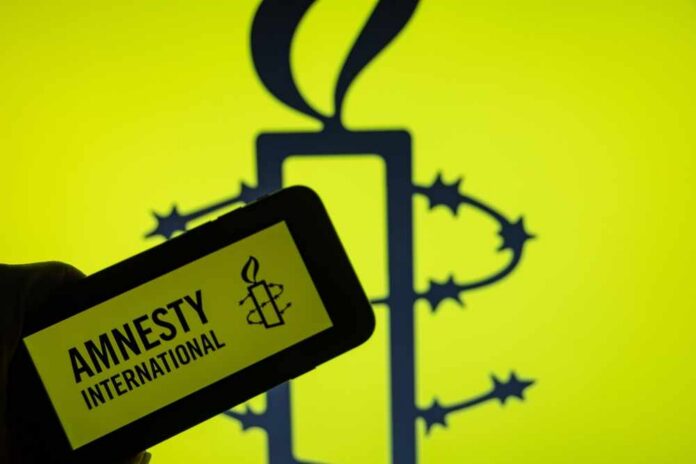
Amnesty International’s 95-page report, Tearing Up the Social Fabric, argues that “anti-NGO laws” in Nicaragua, Venezuela, Paraguay, Peru, El Salvador, and Ecuador are shrinking civic space and chilling human-rights work. The report was built from interviews with 15 civil-society organizations across those countries, according to critics who say governments were not consulted for response or context. Amnesty’s public messaging frames these laws as part of a regional pattern rather than a country-by-country security debate.
JURIST’s coverage of the Amnesty campaign underscores Amnesty’s position: the laws are described as discriminatory and enabling state control over civil organizations, including requirements around approval and reporting that can block or delay funding. Amnesty’s materials emphasize the downstream effects—fear of penalties, administrative burdens, and reduced ability to operate—rather than adjudicating whether any particular group is acting as a political instrument. That choice matters, because it leaves readers with a broad moral verdict but limited verification of contested allegations.
Critics point to U.S. funding streams and regime-change history
John Perry’s April 1 critique argues that Amnesty’s framing ignores a long record of U.S. funding for political activism abroad through bodies such as USAID and the National Endowment for Democracy (NED). The critique cites figures including USAID spending in Venezuela since 2017 routed through NGOs, and U.S.-funded programs in Cuba in earlier years that critics describe as covert political initiatives. Perry also argues that NED priorities have explicitly highlighted Nicaragua, Cuba, and Venezuela—three long-running U.S. adversaries.
Amnesty, in the account summarized by Perry, declines to evaluate claims “case by case” when governments argue particular NGOs function as partisan actors or conduits for foreign influence. That posture can be principled—rights groups often avoid becoming investigative arms for states—but it also creates an evidentiary gap when a report condemns restrictions without rigorously testing the underlying security rationale. For U.S. conservatives wary of mission creep, the unanswered question is simple: are American tax dollars supporting neutral humanitarian work, or political operations overseas?
“Anti-NGO laws” vs. transparency: the FARA comparison
Governments defending NGO restrictions often frame them as transparency measures aimed at foreign funding and political interference. Perry’s critique says several laws resemble “foreign agent” approaches, drawing comparisons to U.S. FARA—an American law that requires certain foreign-influence activities to be registered and disclosed. That comparison does not automatically justify any given Latin American law, but it complicates Amnesty’s narrative of uniquely authoritarian behavior. If transparency is legitimate at home, voters will ask why it is treated as illegitimate abroad.
Amnesty’s report groups left-leaning governments such as Nicaragua and Venezuela with right-leaning governments such as Ecuador and Paraguay, presenting the phenomenon as region-wide rather than ideological. Critics counter that the political context differs sharply by country, including the extent of U.S. involvement and sanctions pressure. The sources provided do not include official government rebuttals, so readers are left without side-by-side text of disputed provisions or a clear account of enforcement practices. That limitation should temper sweeping conclusions.
Why this matters in 2026: conservatives question permanent interventionism
The controversy lands at a sensitive political moment. With President Trump in a second term, his administration owns the foreign-policy machinery—whether through overt action or through “soft power” spending that can escalate tensions. Many conservative voters who fought the left on globalism, runaway spending, and bureaucracy are now just as impatient with open-ended intervention abroad, especially when it comes wrapped in nonprofit branding. When rights groups defend NGO networks without addressing foreign-government funding and political activity, skepticism is predictable.
Amnesty International defends US regime-change NGOs: Venezuela, Nicaragua, and Cuba
by Roger D Harris and John Perryhttps://t.co/GopN1q2jfhAmnesty International’s latest report on Latin America claims governments are dismantling civil society—but this critique argues the…
— Countercurrents.org (@Countercurrents) April 1, 2026
For constitutional-minded Americans, the core issue is accountability. If U.S.-funded entities are shaping another country’s politics, voters deserve transparent budgets, clear goals, measurable outcomes, and lawful limits—because hidden programs create blowback, distort diplomacy, and invite the very “forever conflict” cycle MAGA voters have been rejecting. The research here documents a real dispute—Amnesty’s broad condemnation versus critics’ regime-change concerns—but it also shows a data gap: absent official responses and granular legal analysis, some claims remain contested.
Sources:
Amnesty International Defends US Regime-Change NGOs: Venezuela, Nicaragua, and Cuba
Rights group calls on countries to push back on ‘anti-NGO laws’
Americas: Concerns Trump agenda
Amnesty International Defends US Regime-Change NGOs: Venezuela, Nicaragua, and Cuba