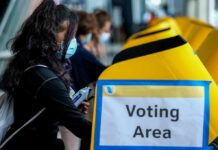

On election night, Senator‑elect Abdul El‑Sayed put both hands on a Sky News reporter during a tense exchange outside a Detroit polling place, and the clip exploded online.
Story Snapshot
- El‑Sayed questioned the reporter’s relevance because he was not a Michigan voter.
- Sky News published the video and called El‑Sayed’s response a misstep.
- Reports say El‑Sayed twice placed his hands on the reporter’s shoulders.
- The viral framing now centers on the physical contact, not the policy stakes.
What Happened Outside The Detroit Polling Place
Sky News correspondent James Matthews approached Abdul El‑Sayed outside a Detroit voting site on election day. El‑Sayed asked if Matthews was registered to vote in Michigan. When Matthews said no, El‑Sayed said, “Then why would I care to have a conversation with you?” He added that he wanted “zero” votes in the United Kingdom and was not running there. During the back‑and‑forth, El‑Sayed placed both hands on Matthews’s shoulders while telling him to stop chasing him.
Sky News posted the video and an article by Matthews describing the moment as a public misstep after a stressful contest. Matthews argued that American elections affect the world and that officials in Washington should answer questions from international media. He denied chasing El‑Sayed and said he was doing his job by asking election questions on site. The clip’s reach multiplied as outlets echoed the “hands on shoulders” image and the “zero UK votes” quote.
How Each Side Framed The Confrontation
El‑Sayed focused on accountability to Michigan voters, not foreign viewers. He pushed back on Matthews’s questions as outside the state’s electorate and said he had addressed what mattered for United Kingdom viewers already. That logic tracks with his campaign’s focus on in‑state issues like healthcare, affordability, and unions. But the exchange included interruptions, dismissive lines, and physical contact, which extended beyond a simple refusal to engage.
Matthews stressed journalism’s role across borders. He said the Michigan Senate race carried international consequences, noting that a new senator may shape foreign policy. He argued that Sky News serves a global audience and that the lack of a United Kingdom ballot was not the point. Sky’s institutional platform then amplified this frame, giving his account wide visibility after the incident.
Why The Moment Went Viral And Why It Matters
Variety reported that the clip drew millions of views on social media platforms. The most‑shared angle highlighted physical contact and sharp sound bites over the deeper question of voter accountability versus press access. That pattern fits research on political media, where emotional and adversarial clips spread faster than context‑heavy reporting. The powerful image of a politician putting hands on a reporter eclipsed the process debate about who gets to ask questions and when.
A historic election win, followed by a heated exchange with a British journalist. Michigan Senator-elect Abdul El-Sayed clashed with Sky News correspondent James Matthews after questioning why he should answer questions from someone who could not vote in his state. The exchange… pic.twitter.com/t8Fc7ZykNV
— India Today Global (@ITGGlobal) November 5, 2026
The stakes reach beyond partisanship. Many Americans feel leaders and media alike chase attention, not answers. Conservatives see an elite press that ignores working people and protects insiders. Liberals see powerful officials dodging scrutiny while inequality grows. This flashpoint feeds both views. A senator‑elect narrowing press access to only in‑state voters worries those who demand transparency. A global outlet steering the narrative with a viral clip worries those who distrust big media gatekeepers.
What We Still Do Not Know
Open questions remain about the approach and the contact. Reports agree El‑Sayed put both hands on Matthews’s shoulders. The record does not settle intent, consent, or whether any safety concern existed. It also does not show what happened just before the clip. Was there prior following or crowd pressure? Did anyone file a complaint? Clear answers would require full, unedited footage from all cameras, statements from both teams, and any venue records from that time window.
How Leaders Can Avoid Repeat Flashpoints
Officials can set simple ground rules at public sites: a press line, time limits, and clear points of contact. Campaigns can provide quick answers on policy stakes for domestic and international audiences, even if longer interviews wait. Journalists can state their aims fast, identify their outlet’s audience, and keep a safe distance. Small steps lower the heat. They also protect the public’s right to see facts without the fight becoming the story.