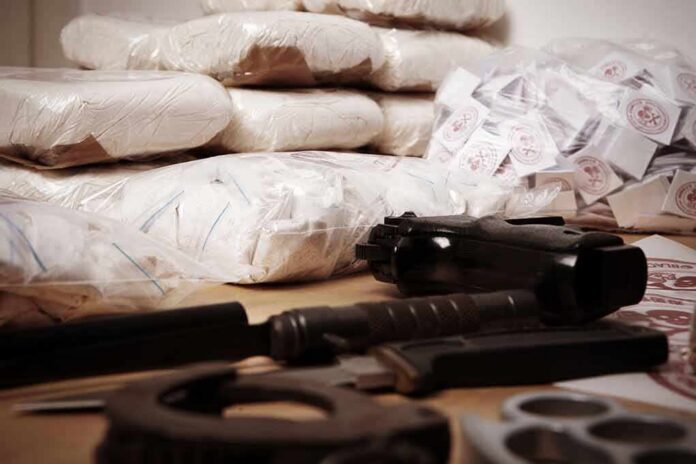
The Coast Guard says it stopped more than 25,000 pounds of cocaine from reaching U.S. streets during a burst of Eastern Pacific interdictions, part of an operation that has now topped 225,000 pounds seized since last year.
Story Highlights
- The Coast Guard reports more than 225,000 pounds of cocaine seized in the Eastern Pacific under Operation Pacific Viper.
- Cutters Munro and Waesche made major busts, including a 22,052-pound seizure and a semi-submersible interdiction.
- Military outlets corroborate the milestone total and a recent 7,707-pound seizure by cutter Bear.
- Officials credit focused maritime patrols and joint targeting in a corridor long used by cartels.
Coast Guard Reports Major Eastern Pacific Cocaine Seizures
United States Coast Guard officials say Operation Pacific Viper has seized more than 225,000 pounds of cocaine in the Eastern Pacific Ocean since August 2025. A recent interdiction of 7,707 pounds by the cutter Bear marked the milestone, according to United States Southern Command’s release. Stars and Stripes and Navy Times reported the same total and cited the Bear’s seizure as the trigger for the update. Officials describe a sustained campaign across common smuggling routes.
Coast Guard units say they disrupted multiple drug loads during short windows at sea, including a burst that blocked more than 25,000 pounds from entering the United States. The service ties these actions to a wider push that pairs cutters, helicopters, and partner aircraft to find and stop small, fast boats and semi-submersibles. Leaders say the Eastern Pacific remains a prime corridor for cocaine shipments headed toward Central America and Mexico for overland transit.
Named Cutters Lead Seizures Of Fast Boats And Semi‑Submersibles
The cutter Munro reported a large bust after its crew detected and stopped a heavily loaded go-fast vessel. Officials said the team detained six suspected smugglers and seized 22,052 pounds of cocaine, worth an estimated $250 million. In a separate patrol, the cutter Waesche interdicted a self-propelled semi-submersible and seized about 2,510 kilograms of cocaine during an 89-day counterdrug mission in the Eastern Pacific. These cases show the mix of vessel types traffickers use.
Military outlets echoed the Coast Guard’s milestone claims as the campaign progressed. Stars and Stripes said Pacific Viper totals exceeded 225,000 pounds after crews interdicted vessels across the Eastern Pacific, again citing the 7,707-pound haul tied to the cutter Bear. Navy Times reported the same figure and described the operation’s rolling total, which has climbed through several public updates since its launch. These reports align with the Coast Guard’s timeline.
Why These Interdictions Matter For Communities And Policy
Border communities, big cities, and small towns all feel the harm tied to cocaine trafficking. Every load stopped at sea can mean fewer violent disputes and fewer overdoses on land. The Coast Guard says maritime interdiction removes drugs before cartels can break shipments into smaller loads that are harder to track. That approach aims to raise risk for smugglers and to push them into less efficient routes that cost more to run.
🚨Threats to our nation will be stopped long before they reach our shores.
On Sept. 11, an Air and Marine Operations P-3 on routine patrol detected a go-fast vessel in the source and transit zone that was initially dead in the water, then got underway before U.S. Coast Guard… pic.twitter.com/fhjqFzgcvE
— CBP AMO (@CBPAMO) September 20, 2026
Law and policy frameworks guide these boardings and seizures. Coast Guard releases link Pacific Viper to long-standing rules that allow stopping and searching smaller vessels suspected of drug smuggling on the high seas, often under bilateral agreements with coastal states. Analysts have long noted that at-sea seizures reflect both enforcement effort and trafficking volume, which is why sustained patrols and steady targeting can shape the market over time.
What This Tells Us About Government Performance
Many Americans across the political spectrum worry that leaders talk tough but fail to deliver. These cases show front-line crews acting with speed and discipline while budget fights drag on in Washington. The Coast Guard’s reported results highlight how targeted tools, clear authority, and daily teamwork can produce real outcomes against complex crime networks. At the same time, steady gains at sea remind us that cartels adapt fast, so policy must match that pace to protect communities.
Sources:
youtube.com, southcom.mil, stripes.com, navytimes.com, foxnews.com, gcaptain.com