
Pete Buttigieg wants to scrap the Electoral College and change how the Supreme Court is built, reviving a fight over how America picks its president.
Story Snapshot
- Buttigieg calls the Electoral College “undemocratic” and wants a straight national popular vote instead.
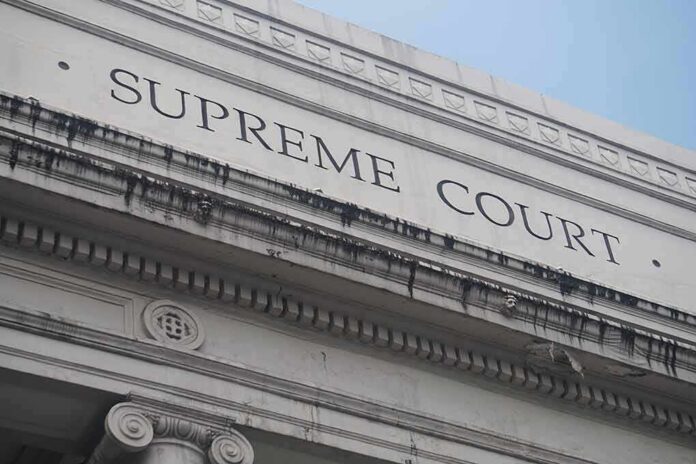
- He has also called for changing the Supreme Court, an idea critics label “court packing.”
- He first pushed this during his 2020 campaign and repeated it at a 2026 Tulsa town hall.
- Any real change would require a constitutional amendment, one of the hardest things to do in American government.
A Long-Running Argument Resurfaces
Pete Buttigieg, the former Transportation Secretary and possible 2028 candidate, has renewed his push to end the Electoral College and change the Supreme Court. He first raised the idea during his 2020 presidential run and has kept repeating it. The debate itself isn’t new. Harvard historian Jill Lepore says reform of the Electoral College is the most frequently proposed constitutional amendment, with roots going back to 1803.
In a 2019 NBC interview, Buttigieg called the Electoral College “undemocratic.” He pointed to two elections in his lifetime when the candidate who won the most votes still lost the presidency. “One person, one vote, counting equally, is the fairest way to choose our president,” he said at the time.
What Buttigieg Actually Proposes
Buttigieg wants a straight national popular vote to replace the current state-by-state, winner-take-all system. In 2019 he said this change would make Americans more confident their government is a real democracy. He also argued it would boost voter turnout across the country, since every vote would count the same no matter where it’s cast.
He has kept making the same case for years. At a Tulsa town hall in May 2026, Buttigieg said, “The candidate who receives the most votes should be President of the United States,” calling the popular-vote idea “a really good idea.” His language has stayed consistent across seven years of public remarks.
The Hard Path to Actually Changing It
Ending the Electoral College isn’t simple. It’s written into the Constitution, so removing it needs a formal amendment. Buttigieg has admitted this himself, saying back in 2019 that the change “wouldn’t be easy to do overnight.” Amendments need approval from two-thirds of Congress plus three-fourths of the states, a bar the country has cleared only 27 times in its history.
Buttigieg has often paired the Electoral College fight with a call to change the size of the Supreme Court, a plan opponents call “court packing.” A 2019 profile noted this sat inside a broader package of “democratic reforms” that also included statehood for Puerto Rico and Washington, D.C.
This is incorrect as of early August 2026. Just a few days earlier (July 31, 2026), former Vice President Kamala Harris publicly called for expanding the Supreme Court to 13 justices and “revisiting” the Electoral College while speaking at the National Urban League Conference.…
— hollydallasbrown (@hollydalla73727) August 4, 2026
Why the Fight Cuts Both Ways
Small states benefit from the Electoral College because it gives their voters more relative power per person than big states get. That built-in edge gives lawmakers from those states a strong reason to fight any change, no matter how the reform is argued. Florida Governor Ron DeSantis has already pushed back, tying Buttigieg’s Electoral College plan to his Supreme Court proposal and calling both an overreach.
The debate lands at a moment when voters on both sides already distrust how Washington operates. Supporters see Buttigieg’s plan as a fix for a system that can hand the presidency to the candidate who got fewer votes. Critics, including many who otherwise dislike the Electoral College, see the timing as another example of politicians chasing structural fights instead of fixing everyday problems like grocery prices and housing costs.
Sources:
youtube.com, thehill.com, floridianpress.com, foxnews.com, brookings.edu