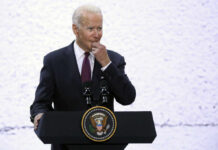
When the boss of an $11 trillion fund openly warns that New York City may no longer be worth the risk, it signals trouble that reaches far beyond Wall Street boardrooms and into the lives of regular New Yorkers.
Story Snapshot
- BlackRock CEO Larry Fink says New York City is “losing its edge” and hints his firm could move more resources to other states if conditions weaken.
- He points to heavy reliance on top earners for tax revenue and warns that even a few thousand wealthy departures could blow a hole in the city’s budget.
- Fink says staff are asking to relocate because of housing costs, crime, and school concerns, echoing wider frustration with city life.
- Researchers and city officials challenge parts of the “tax flight” story, but they offer little hard data to answer his warnings head‑on.
What Larry Fink Is Warning About New York City
BlackRock Chief Executive Officer Larry Fink has started saying out loud what many business leaders only whisper: he is “worried about New York” under Mayor Zohran Mamdani and is thinking about putting more of BlackRock’s United States resources somewhere else if the city’s environment keeps getting weaker. Fink says New York City is “on the verge of losing a lot of companies” and argues that other states are “more appealing at this moment” for employers like his. This is not a random voice; BlackRock helps direct more than $11 trillion of other people’s money worldwide, which gives his comments weight in political and business circles.
Fink’s most shocking point is about who pays for New York City’s government. He says 47 percent of city tax dollars come from the top one percent of earners and warns that losing just 5,000 of those high‑income residents could wipe out any gains the current administration is hoping to make. He calls this a “great statistic,” but he does not share the source, and the Mamdani administration has not released its own data to confirm or challenge it. For many readers, this feels like the same old story: a city that spends big, taxes heavy, and then prays its richest taxpayers do not head for the exits.
Crime, Housing, and Schools: Quality of Life Under Fire
Fink’s criticism is not only about taxes; it is about everyday life in New York City. At the Economic Club of New York, he said the city is “plagued by crime and filth” and “lacks enough good schools,” warning that these problems together make companies think twice about staying. He reports that more BlackRock employees are asking to move to other states because of housing costs, crime, and education worries. These concerns match wider surveys showing that a large majority of New Yorkers see affordability as a very important reason for considering leaving the city.
Housing costs in New York have been a sore spot for years, and Fink’s comments tap into frustration on both the left and the right. Working families feel squeezed by rent and rising prices, while older conservatives see this as proof that big‑spending, progressive policies have failed. Liberals see the same pressures as evidence of deep inequality and a system tilted toward wealthy investors and landlords. When Fink says New York is “losing its appeal,” he is putting numbers and corporate clout behind a feeling many residents already share, even if they blame different politicians and policies for causing it.
Corporate Threats, City Competitiveness, and the “Elite” Question
Fink’s warning also fits a long‑running pattern: big companies using the threat of moving jobs and money to push city leaders on taxes, safety, and services. Studies of city competitiveness show that business leaders now watch governance, costs, and quality of life closely when they decide where to invest. In that sense, New York is not unique. In Europe, for example, more than 80 percent of chief executives say their region is becoming a weaker base for industry because of energy prices, inflation, and political risk. Fink’s comments plug directly into that broader anxiety about cities that are expensive, uncertain, and slow to fix basic problems.
Still, there is pushback. Researchers at the Fiscal Policy Institute, looking at 2023 tax data, found that top earners leave New York at about one‑quarter the rate of the general population and that recent tax hikes did not trigger a huge rush for the exits. That challenges the simple story that rich people are fleeing in droves, but it does not answer Fink’s specific claims about crime, schools, and housing today. City leaders like Comptroller Brad Lander are pressing BlackRock on climate action instead, demanding stronger steps toward net‑zero emissions across its portfolio, which adds another layer of tension between public officials and powerful investors.
Why This Matters Beyond New York Politics
For many Americans, the fight between Fink and Mamdani captures a deeper worry: that the system is run by a small group of elites who will protect their own interests first, whether they sit in government or in corporate towers. Conservatives see a city government that talks about justice while letting crime, filth, and high energy costs drive away jobs and taxpayers. Liberals see a giant asset manager threatening to move money unless policies suit its bottom line. Both sides notice that regular workers and families are the ones stuck with the fallout when companies leave or budgets break.
Fink’s remarks do not prove that New York has already failed, and some of his numbers need better public checks. But they draw attention to a key point that crosses party lines: when housing is too expensive, when public safety feels shaky, and when schools do not give kids a fair chance, the promise of the American Dream is harder to reach, no matter who is mayor or president. Whether New York’s leaders respond with real data and real reforms—or with silence and spin—will show how serious they are about fixing a city many people now say is losing its edge.
Sources:
foxnews.com, finance.yahoo.com, bloomberg.com, youtube.com, comptroller.nyc.gov, en.wikipedia.org, readtheprofile.com, nypost.com, facebook.com