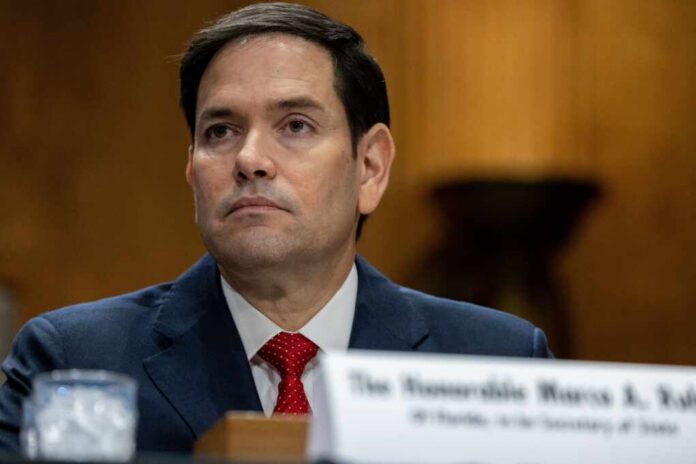
Secretary of State Marco Rubio’s blunt call for regime change in Cuba has ignited conservative support, but his hawkish stance raises questions about whether the Trump administration is steering America toward another costly foreign entanglement instead of keeping promises to avoid new wars.
Story Snapshot
- Rubio explicitly demands Cuba’s communist government must fall for economic recovery, echoing Cold War-era regime change doctrine
- His March 2026 comments follow a February Munich speech warning allies about communism’s legacy and urging Western rearmament
- Conservative base torn between admiration for anti-communist rhetoric and concern over interventionist foreign policy creep
- Rubio’s hardline approach pressures European allies on defense spending while critiquing globalist policies that weakened American industry
Rubio’s Regime Change Declaration Sparks Conservative Debate
Marco Rubio stated on March 27, 2026, that Cuba’s economy cannot recover without overthrowing its communist government, declaring the regime itself the root cause of economic collapse. His Cuban-American heritage adds personal weight to this position, yet the explicit regime change language evokes memories of Iraq, Libya, and Afghanistan—interventions that cost trillions and delivered chaos. Many Trump supporters who voted to end endless wars now face a dilemma: applaud Rubio’s anti-communist clarity or fear another Middle East-style quagmire, especially as the administration battles Iran. This tension underscores a fracture in MAGA ranks between ideological purity and non-interventionist principles.
Munich Speech Lays Foundation for Hawkish Foreign Policy
Rubio’s February 14, 2026, Munich Security Conference address set the stage for his Cuba remarks, criticizing post-Cold War policies that embraced unfettered trade, mass migration, and outsourced supply chains to rivals like China. He warned European allies that Soviet-era threats never truly vanished, urging rearmament and reindustrialization to counter civilizational decline. Defense analysts praised this “reality check” for demanding accountability from allies while reaffirming transatlantic bonds. Yet Rubio’s push for burden-sharing and border control mirrors arguments conservatives made against globalism—policies that enriched elites while gutting American manufacturing and driving inflation. The speech signals a foreign policy pivot that could either restore American strength or drag the nation into new conflicts.
Anti-Communist Rhetoric Resonates but Risks Overreach
Rubio’s framing of communism as an existential threat taps deep conservative values rooted in Cold War history, from the Berlin Wall to the Cuban Missile Crisis. His message appeals to voters frustrated by woke agendas and illegal immigration, positioning him as a defender of Western civilization against leftist regimes. Cuban exiles and right-leaning media amplified his March comments, viewing them as overdue honesty about failed ideologies. However, this rhetoric risks justifying interventions that conservatives increasingly reject after decades of nation-building disasters. With energy costs soaring and Trump’s second term mired in an Iran war, many supporters question whether toppling Cuba’s regime serves American interests or distracts from domestic priorities like securing borders and reducing government overreach.
Broader Implications for Trump’s Second Term Agenda
Rubio’s dual focus on regime change and allied reform reflects the administration’s attempt to balance America First principles with global leadership. His calls for supply chain independence from China and criticism of climate policies weakening Europe align with conservative economic goals, promoting reindustrialization and energy dominance. Defense sector interests benefit from rearmament demands, while tech and space innovation gain attention as strategic priorities. Yet the Iran war already tests MAGA unity, with voters who backed Trump to avoid new conflicts now watching defense budgets swell. Rubio’s hardline stance on Cuba and communism could either galvanize the base around ideological clarity or deepen divisions over whether the administration abandoned its promise to keep America out of regime change wars that erode constitutional limits and fiscal responsibility.
The Secretary of State’s rhetoric raises fundamental questions for conservatives: does opposing communism require overthrowing foreign governments, or should America prioritize domestic renewal over interventionist adventures? Rubio’s personal conviction and strategic arguments resonate with voters who despise socialism, yet the cost of past wars—in blood, treasure, and constitutional overreach—haunts a movement that elected Trump to end endless conflicts. As the administration navigates Iran and pressures allies, Rubio’s “2.0” persona tests whether the right can reconcile anti-communist principles with the non-interventionism that defines its populist resurgence.