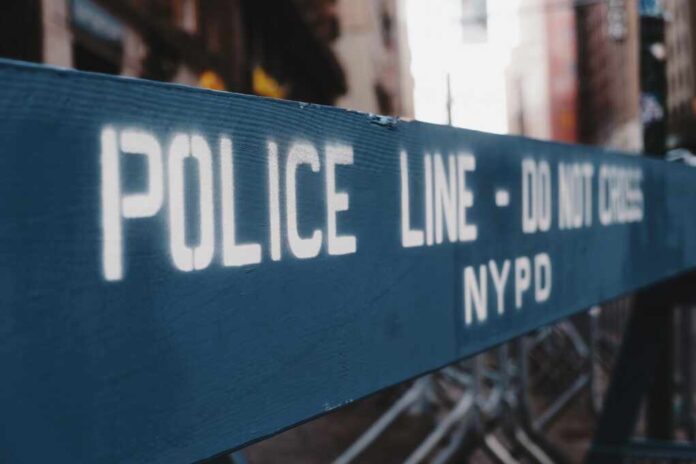
A Queens teenager was chased down and fatally stabbed on a New York sidewalk, the latest grim reminder of how years of soft-on-crime policies have turned city streets into danger zones for ordinary families. The killing is not an isolated incident but fits into a troubling pattern of youth stabbings, revealing a deeper breakdown in community order, housing stability, and the justice system’s ability to deter violent crime. For families seeking safety, this senseless death reinforces the urgent need for real accountability and firm consequences for violent offenders.
Story Highlights
- A Queens teen was chased and fatally stabbed in the neck after a street dispute with two males, dying on the sidewalk after trying to escape.
- The killing echoes a disturbing pattern of youth neck stabbings in Queens, including deadly incidents in Corona and Woodhaven.
- Neighbors describe grief, fear, and terror as revolving‑door housing and frayed community ties feed low‑level disputes that quickly turn lethal.
- New York’s long experiment with lenient justice and weakened street order left families exposed; rebuilding safety will demand serious consequences for violent offenders.
Teen Chase Killing Rattles Queens Community
A Queens teenager’s final moments played out on a neighborhood street, where a dispute with two males spiraled into a deadly chase and a fatal stabbing to the neck. The teen tried to run, but the two pursued him down the block until one plunged a blade into his neck, sending him collapsing on the sidewalk as stunned residents watched. A bystander’s anguished reaction, “What a sin,” captured a community’s grief over a death that never should have happened.
Emergency responders arrived after witnesses called 911, rushing the teen to a local hospital where doctors could not save his life. Police opened a homicide investigation and began searching for the two males linked to the dispute and chase. The attack was not described as random, but as a confrontation that escalated rapidly and brutally. For families already uneasy about street safety, the image of a young man hunted down in his own borough reinforces a sense that everyday conflicts now carry lethal risk.
NYC teen stabbed in neck, killed after dispute: ‘What a sin’ https://t.co/v8kotBbWSv pic.twitter.com/35NvgDyrev
— New York Post Metro (@nypmetro) January 11, 2026
Pattern of Youth Stabbings Points to Deeper Breakdown
This killing did not happen in isolation; it fits into a troubling pattern of neck stabbings involving youth and young adults in Queens. In Corona, 24‑year‑old Byron Lema‑Naula was fatally stabbed in the neck inside a home after a dispute, with a 16‑year‑old taken into custody and a knife recovered. Neighbors described him as a polite, hard‑working young man renting a room, blindsided by violence in what should have been a place of refuge, not a battleground.
In Woodhaven, a 17‑year‑old was found near 76th Street and 86th Avenue with trauma to his neck just before mid‑afternoon, rushed to the hospital and pronounced dead, with no immediate arrests. Together with the latest teen chase stabbing, these cases show the same core elements: youth or young adults, arguments that flare and spin out of control, and blades used to settle disputes. Residents see their blocks labeled “dangerous” while wondering how many warnings city leaders need before restoring real deterrence.
Housing Instability, Weak Ties, and Eroded Order
Behind the headlines, neighbors describe buildings where landlords pack in tenants, rooms turn over constantly, and social bonds never have a chance to form. In the Corona case, locals spoke of barbecues, parties, and a revolving door of renters sharing tight spaces, creating friction and confusion over who really belongs. In that environment, minor slights or arguments about money, noise, or respect can turn explosive, especially when young men already feel no one is truly in charge.
These conditions intersect with a broader erosion of order that many New Yorkers trace back to years of lenient prosecution, watered‑down penalties, and political leaders more focused on ideology than basic public safety. When teens watch people walk away from serious charges or cycle in and out of the system with little consequence, weapons begin to look like the only guarantee of control. That mindset makes every argument a potential trigger, and every sidewalk a possible crime scene for families simply trying to live their lives.
What Accountability and Real Safety Should Look Like
For conservative readers who value law, order, and family security, these repeated youth killings illuminate why serious crime must carry serious consequences. Parents cannot raise kids safely when armed teens treat disputes as opportunities to prove toughness, and prosecutors treat violence as a social misstep. Robust homicide investigations, firm sentencing for repeat violent offenders, and support for officers on the street all send a clear message: you do not get to chase someone down and take a life without losing your freedom for a very long time.
At the same time, rebuilding safety means restoring the local accountability that once kept neighborhoods stable. That includes tightening oversight of crowded, informal rentals that fuel tension, backing community efforts that teach conflict resolution before knives come out, and insisting that schools and city agencies stop excusing dangerous behavior as inevitable. New Yorkers deserve streets where a teen can walk away from a heated moment and go home alive, not sidewalks stained by yet another senseless killing mourned as “what a sin.”
Watch the report: 2 persons of interest sought in Queens teen’s stabbing death
Sources:
- 17-year-old fatally slashed in neck in Queens: NYPD
- Queens stabbing leaves man dead in Corona home
- NYC teen stabbed in neck, killed after dispute: ‘What a sin’