
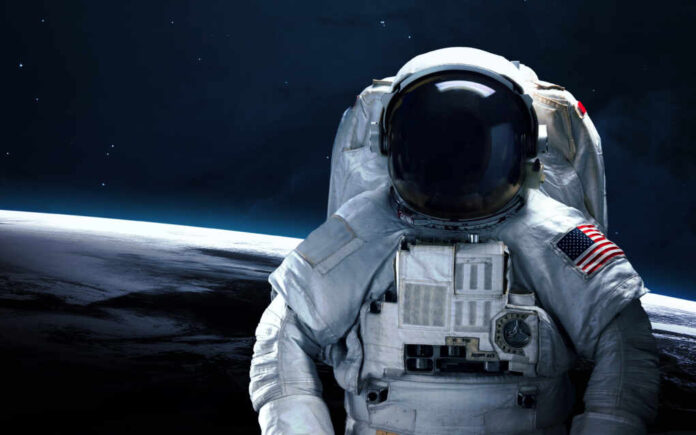
After 245 days aboard the International Space Station, a crucial mixed crew of American astronaut Jonny Kim and Russian cosmonauts Sergey Ryzhikov and Alexey Zubritsky has safely completed its mission. Their successful return to the Kazakh steppe aboard the Soyuz MS-27 spacecraft marks a quiet but significant victory for international space cooperation, underscoring America’s sustained leadership in orbit despite the friction of global tensions back on Earth. The eight-month flight ensured the ISS remained fully operational, advancing key scientific research that will shape the future of deep space exploration.
Story Highlights
- NASA astronaut Jonny Kim and Roscosmos cosmonauts Sergey Ryzhikov and Alexey Zubritsky landed safely on the Kazakh steppe after a 245-day mission aboard the ISS.
- The Soyuz MS-27 spacecraft completed a nominal reentry and parachute-assisted touchdown southeast of Dzhezkazgan, Kazakhstan.
- Kim’s return marks another successful U.S. crew rotation, preserving American presence and research on the International Space Station.
- The mission highlights continued NASA-Roscosmos cooperation despite geopolitical friction, ensuring ISS remains fully staffed and operational.
Successful Return from Long-Duration Mission
NASA astronaut Jonny Kim and Roscosmos cosmonauts Sergey Ryzhikov and Alexey Zubritsky returned to Earth aboard Soyuz MS-27, landing on the Kazakh steppe after an approximately 245-day mission to the International Space Station. The crew undocked from the ISS, conducted a deorbit burn, re-entered Earth’s atmosphere, and made a parachute-assisted landing southeast of Dzhezkazgan. NASA confirmed the landing occurred at 12:03 a.m. EST on December 9, 2025, ending an eight-month research flight that kept the station fully crewed and productive.
During their time in orbit, the crew completed about 3,920 Earth orbits and traveled nearly 104 million miles while supporting ISS operations and scientific research. After landing, recovery forces quickly reached the capsule, extracted the crew, and conducted initial medical checks. The astronauts were then flown by helicopter to Karaganda, Kazakhstan, where Kim boarded a NASA aircraft bound for Houston, while Ryzhikov and Zubritsky returned to Star City, Russia, for post-flight evaluations and debriefings.
Back on Earth after an eight-month space research mission aboard the station! @JonnyKimUSA and two Roscosmos cosmonauts landed in Kazakhstan inside the Soyuz spacecraft at 12:03am ET Tuesday (10:03am Kazakhstan time). https://t.co/C2LslR4fLa
— International Space Station (@Space_Station) December 9, 2025
U.S. Space Leadership and International Cooperation
The International Space Station has been continuously inhabited since 2000, serving as a microgravity research lab and testbed for future exploration. Long-duration crew rotations, typically lasting 4–9 months, have been standard since the early 2000s, with Soyuz serving as a primary crew transport and lifeboat. Even after the Space Shuttle’s retirement in 2011 and the rise of commercial crew vehicles like SpaceX’s Crew Dragon, NASA has maintained a mixed-fleet strategy, including limited Soyuz seat swaps to ensure redundancy and crew safety.
Despite ongoing geopolitical tensions, NASA and Roscosmos have continued to honor their operational commitments on the ISS, citing mutual dependence for station operations and crew safety. This latest return demonstrates that space cooperation can remain insulated from broader political disputes, at least while the ISS remains operational. The successful landing reinforces Soyuz’s reliability and the deep operational integration between U.S. and Russian mission control centers in Houston and Moscow.
Scientific and Strategic Value of the Mission
Kim’s 245-day exposure to microgravity provides valuable biomedical data on bone density, muscle atrophy, cardiovascular changes, neurovestibular effects, and behavioral health. This data feeds directly into NASA’s long-duration human spaceflight programs, including Artemis and future Mars missions, helping refine countermeasures and vehicle designs. The mission also advanced research in materials science, combustion, fluid dynamics, Earth observation, and technology demonstrations, benefiting scientific communities and industry partners.
Operationally, the return completes a scheduled crew rotation, freeing up Soyuz and ISS resources for subsequent crews while ensuring the station remains continuously staffed. The continued use of Soyuz alongside commercial crew vehicles validates a multi-provider access model, which is likely to influence planning for future platforms like the Lunar Gateway. Each successful Soyuz mission also reinforces Roscosmos’s reputation as a reliable human spaceflight provider, shaping discussions about Russia’s future role in ISS and potential successor stations.
For American families, Kim’s safe return is a reminder of what U.S. space leadership looks like: disciplined, mission-focused, and grounded in real science and national interest. It stands in contrast to the wasteful, politicized agendas that have too often dominated Washington in recent years. As we push forward with Artemis and beyond, maintaining strong, practical partnerships in space—without sacrificing American sovereignty or security—will remain essential.
Watch the report: NASA astronaut and Roscosmos cosmonauts return to Earth from International Space Station
Sources:
Russian Soyuz capsule lands on Earth to return crew of 3 home after months on International Space Station (video)
Live on NASA+: Three Crewmates Say Farewell, Set to Depart Station – NASA
Soyuz Crew Lands Ending Eight-Month Space Research Journey – NASA
Midnight Touchdown: Space Team Heads Back to Earth After 245 Days – Signals AZ