Police now say Ann Widdecombe may have been attacked a full day before she was found, raising sharp questions about missing hours that could be the key to catching her killer.
Story Snapshot
- A 26-year-old man was arrested on suspicion of Ann Widdecombe’s murder, then released with no charge and removed from the investigation.
- Police believe the former MP was attacked on Wednesday but only found on Thursday, leaving a serious gap in the timeline.
- Officers say they are not treating the case as terrorism and have “no information” that the killing was political.
- Conflicting media reports and heated online debate are fueling public distrust about how the case is being handled.
The confirmed timeline and the “missing hours”
Devon and Cornwall Police say Ann Widdecombe, age seventy-eight, was found dead with serious injuries at her home in Haytor on Dartmoor on a Thursday morning after officers were called by the ambulance service at about 11:40 a.m. Police later revealed they now believe she was attacked on Wednesday afternoon, almost twenty-four hours earlier, meaning she lay undiscovered through the night. That long gap between the suspected attack and her discovery is driving fresh questions about who had access to her home and what happened in those missing hours.
Police quickly opened a murder investigation and at first said they were hunting a white male suspect, with the case “moving at a significant pace.” On Friday, officers arrested a twenty-six-year-old white British man at an address in Newton Abbot on suspicion of murder, tying him to the death but releasing few details. Over the weekend, however, police confirmed that this man had been released from custody and was “no longer part of the investigation,” leaving the public with a named arrest but no clear suspect.
What police are saying about motive, terror, and evidence
Assistant Chief Constable Matt Longman told reporters that counterterrorism officers were consulted in the early stages but that the case is not being treated as terrorism. He also said he had “no information to believe that this is a politically motivated crime,” stressing that investigators are keeping an open mind but have seen no proof of a political link. Police say they are not looking for anyone else at this stage, which suggests they believe the attack was carried out by a single person, even if that person is not yet publicly identified.
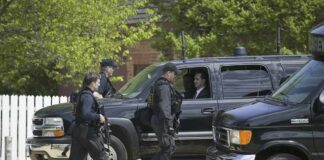
Detectives have described Widdecombe’s home and the surrounding area on Dartmoor as a major crime scene, with forensic teams working to piece together what happened. Officers have appealed for video doorbell recordings and other camera footage from Haytor and nearby areas, hoping that images from Wednesday and Thursday will show who came and went from the property. So far, there is no public autopsy report, no released forensic findings, and no official comment on whether Widdecombe knew the arrested man, which leaves many basic questions still unanswered.
Media confusion, online anger, and trust in the system
News outlets and social media users have seized on every small update, sometimes creating confusion. Some reports still repeat that the arrested man “remains in custody,” while later coverage and official statements say he has been released and removed from the inquiry. At the same time, clips of police press conferences have been shared with errors in Widdecombe’s name and other details, which makes it harder for people to know which information to trust in a fast-moving case.
Something is very off about the murder of Ann Widdecombe.
pic.twitter.com/Gyko0cUEa5— Tommy Robinson 🇬🇧 (@TRobinsonNewEra) July 12, 2026
Online, many are comparing Widdecombe’s death to the murders of members of Parliament Jo Cox and Sir David Amess, which were clearly driven by extremist politics and treated as terrorism. That history shapes how people react now: when a well-known political figure is killed, both right and left tend to assume a hidden political motive, even when police say they have seen no such evidence. In this case, the gap in the timeline, the brief arrest, and the lack of released forensic facts are feeding a wider belief that the authorities are not being fully open.
Why this case hits a nerve about power and ordinary people
Many citizens, in Britain and in the United States, already feel the system serves elites first and regular people last. When a famous former MP is killed in her own home and the story is marked by shifting statements, conflicting reports, and warnings against “speculation” online, it fits a familiar pattern of control from the top. People watch officials and media struggle to give straight answers and feel once again that important information is locked away behind closed doors.
For conservatives, Widdecombe was a voice against political correctness, mass immigration, and the growth of government power, so her killing looks like another sign that public life has become more dangerous and less honest. For many liberals, any unsolved violent death highlights the growing gap between the powerful and the vulnerable and the way serious social problems go unaddressed. Both sides share one basic worry: if even the death of a national figure cannot produce clear, timely answers, what hope is there for justice when ordinary citizens are the victims?
Open questions as the investigation continues
Key facts remain unknown. The full autopsy report, detailed forensic results, and any digital trail between Widdecombe and the released suspect have not been shared with the public. Police say they are keeping an open mind, but they have not explained why they are “not looking for anyone else” while also saying the only arrested man is no longer under investigation. Until those gaps are filled, the missing hours between the suspected Wednesday attack and Thursday discovery will continue to drive concern, suspicion, and calls for greater transparency from people across the political spectrum.
Sources:
independent.co.uk, thelondoneconomic.com, youtube.com, bbc.com, ca.news.yahoo.com, itv.com, pbs.org